Better Case Acceptance Starts With Understanding Your Patient
By Rebecca Herring, Founder and CEO of Transformational Dental Coaching
Guest article for DOMA’s case acceptance month. Rebecca Herring looks at what patient hesitation may be telling you, and what to ask before you change the presentation.

You have explained the treatment, reviewed the estimate, and offered appointment options. The patient smiles and says, “I need to think about it.” You smile back, but inside you are wondering what you missed. Was it the explanation? The fee? Should you have shown the image again? Before giving your presentation an overhaul, consider what the patient may still be trying to tell you. “I need to think about it” can mean anything from “I don’t understand why I need this” to “I’m embarrassed to admit I cannot afford it.”
In my work with dental teams, I encourage us to look beyond whether a patient schedules and ask whether we understand their hesitation. We know the treatment plan. They know the circumstances they must fit it into. Better conversations begin when we make room for both perspectives.
Understand what the appointment feels like to them
For your team, discussing a crown may be a routine Tuesday. For the patient, it may be an unexpected expense, another missed shift, or a reminder of an appointment they would rather forget. They may be nodding because they understand, or because they want to be polite and leave. Familiarity with dentistry can make it easy to move faster than the person sitting across from us.

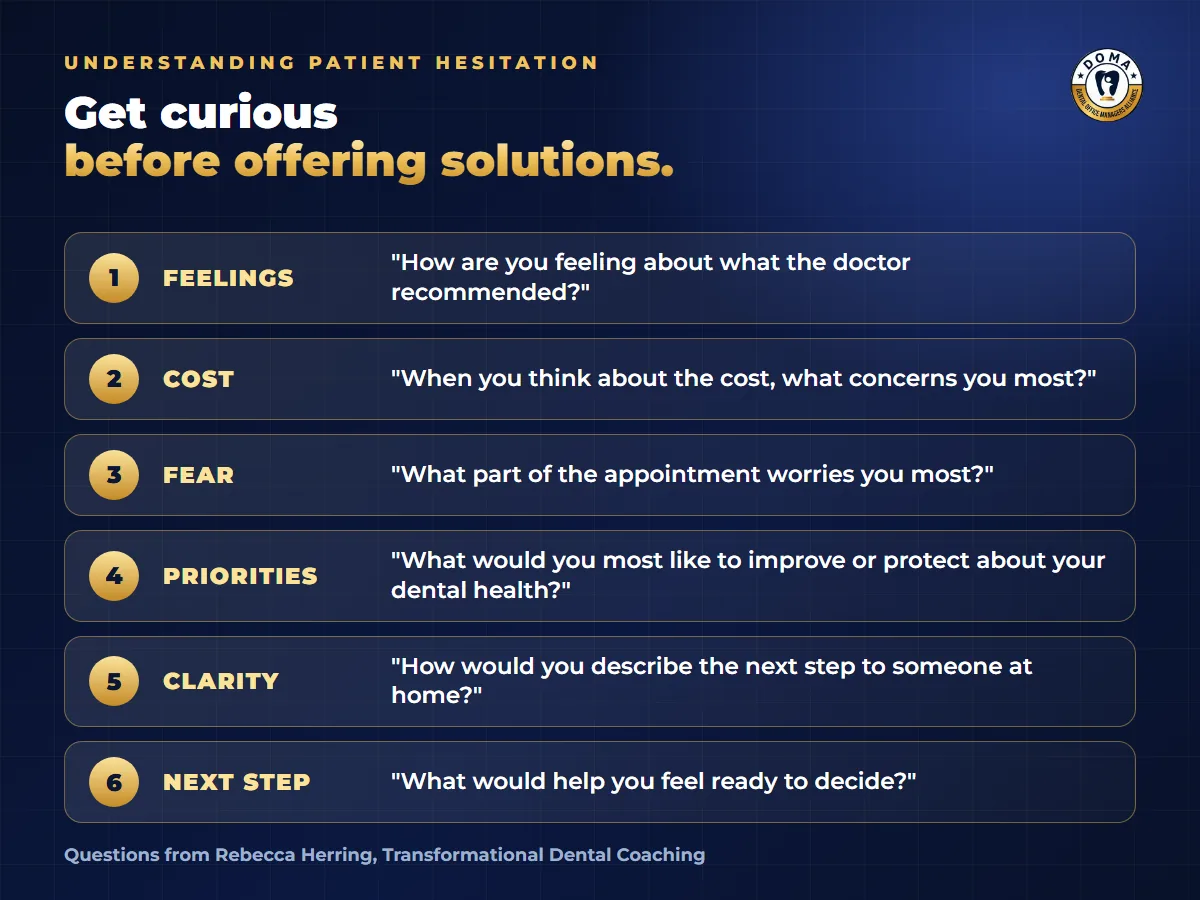
Before reviewing fees, ask, “How are you feeling about what the doctor recommended?” Then wait. If they say, “I wasn’t expecting all of this,” resist launching into another explanation. Try, “It sounds like this was a lot to take in. What feels most concerning right now?” That response gives the patient permission to be honest. Ask early in the visit, too: “Is there anything about past dental experiences you would like us to understand?” Share relevant concerns with the team so patients do not have to start over at checkout.
Free guide
Before You Present: Understand the Patient
Learn what matters to the patient before the treatment plan and the fee come up. Stop assuming it’s always about money, and listen before you explain.
Get the free guideGet curious about patient hesitation before offering solutions
When a patient mentions cost, we may reach for financing before learning what they need. Someone who cannot manage the expense needs a different conversation than someone who does not understand the recommendation. Ask, “When you think about the cost, what concerns you most?” If they say, “I just replaced my furnace,” acknowledge the competing expense: “That is a lot to manage at once. Would it help to review the estimate together and ask the doctor to clarify the treatment priorities?” The dentist determines whether timing or treatment sequence can change. Our role is to help the patient get clear answers.
Free guide
I Can't Afford It. Now What?
First make sure money is the real barrier. Then check your financial options: payment policies, insurance, in-house membership, third-party financing and phased treatment.
Get the free guideThe same curiosity applies to fear. “You’ll be fine” may sound reassuring to us, but it gives a worried patient little to work with. Ask, “What part of the appointment worries you most?” If they describe feeling trapped during past treatment, reflect that back: “Having some control during the appointment matters to you. Let’s talk with the clinical team about how they can support that.” Notice the difference between offering reassurance and helping someone identify what would make them feel safer.
Explain value through the patient’s priorities
A technically accurate explanation can still leave a patient wondering, “What does this mean for me?” Ask, “What would you most like to improve or protect about your dental health?” Listen to their language. They may want to enjoy meals, preserve a tooth, feel comfortable smiling, or avoid being surprised by another dental problem. Their priorities help you make the doctor’s recommendation relevant without assuming everyone wants the same thing.
If a patient says, “I want to keep my teeth, but nothing hurts,” pause there. Ask the doctor to show the finding and explain why treatment is recommended despite the lack of discomfort. Then check what remains unclear: “How does that fit with what you were thinking?” Use images as part of the conversation, with plain explanations of what they show. Keep benefits, limitations, alternatives, and timing consistent with the dentist’s assessment. Patients deserve enough information to weigh a recommendation against their own priorities.
Make understanding and dignity part of the process
Dental language can make people feel reluctant to ask questions. A patient who cannot remember the word “crown” may still say yes when asked, “Does that make sense?” Instead, take responsibility for clarity: “I want to make sure we explained this well. How would you describe the next step to someone at home?” Their response may reveal that they understand the procedure but believe insurance will cover the entire fee. That is useful information to uncover before scheduling.
Protect dignity throughout the conversation. “Why did you wait so long?” can make someone defend their past when you need to discuss their next step. Try, “We’re glad you’re here. What would help make moving forward manageable?” Review finances privately and explain estimates, insurance uncertainties, and payment terms clearly. Avoid making assumptions based on appearance, occupation, or previous decisions. A patient who declined last year may have different circumstances today. Give them space to tell you.
Carry the patient’s concerns through the handoff
Trust can weaken when one person listens carefully and the next starts the entire presentation again. With the patient’s permission, make the handoff specific: “Maria understands the recommendation. Her main concern is missing work, and she would like to review appointment lengths.” The next person can respond, “Let’s look at what each visit involves and which times might work.” That exchange shows Maria, her concern made it into the plan.
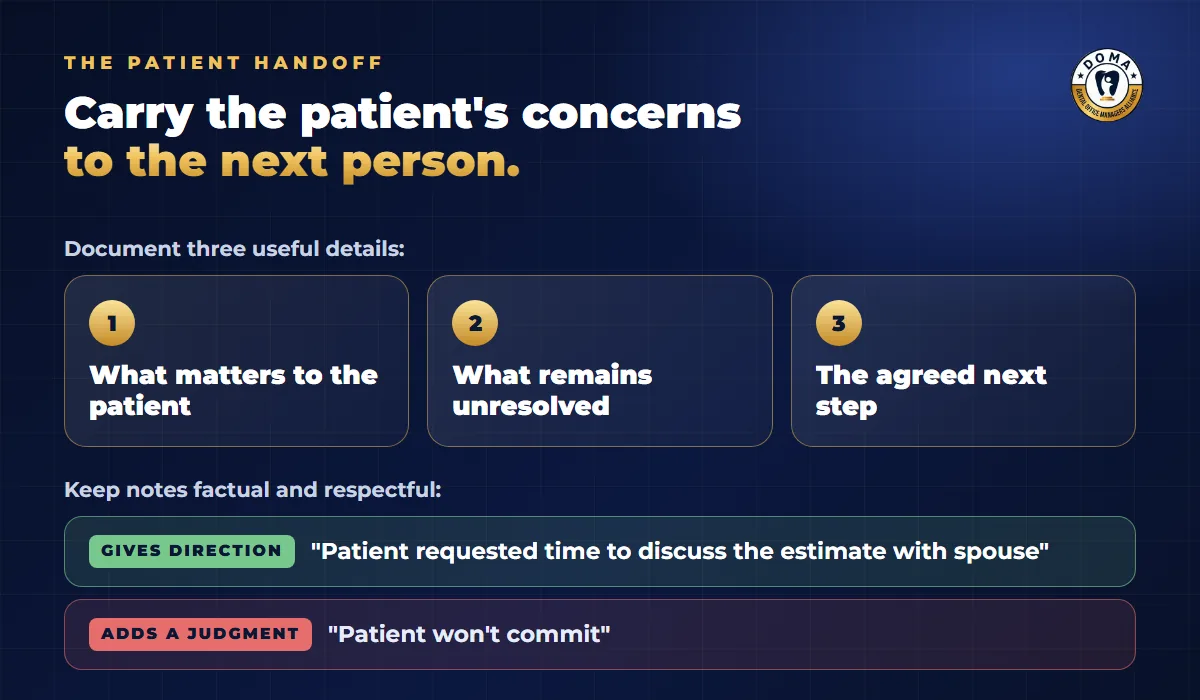
Office managers can make this repeatable by asking teams to document three useful details: what matters to the patient, what remains unresolved, and the agreed next step. Keep notes factual and respectful. “Patient requested time to discuss the estimate with spouse” gives a teammate direction. “Patient won’t commit” adds a judgment without explaining what support is needed. Assign ownership of follow-up so the patient knows whom to contact and the team knows who will respond.
Measure what the conversation accomplished
An unscheduled plan deserves a clear next step. Ask, “What would help you feel ready to decide?” Agree on any further discussion, an appropriate follow-up date, and the patient’s preferred contact method. Respect a decision to decline and document it according to practice protocol. Patients should feel comfortable returning with questions, even when they are not ready to schedule today.
At your next team meeting, practice one familiar hesitation. Have one person play the patient and another ask questions before suggesting a solution. Debrief by asking, “What did we learn that we would have missed by talking more?” During treatment reviews, discuss unresolved concerns alongside acceptance numbers. Better case acceptance starts with a patient who can explain the recommendation, ask an uncomfortable question, and trust that the team will listen to the answer.
Free mini course
Better Conversations. Better Case Acceptance.
Six short lessons for dental office managers and teams: understand what matters to the patient, discuss fees and scheduling clearly, and agree on next steps.
Start the free mini course
About the author
Rebecca Herring
Rebecca Herring is the Founder and CEO of Transformational Dental Coaching, and an Executive Coach with Dentist Entrepreneur Organization (DEO). She is an international speaker, dental leadership and operations strategist. She works alongside practice owners, office managers, and teams to strengthen communication, develop leaders, and build dependable systems. Her experience spans practice operations, team training, treatment presentation, and remote/virtual team integration. Rebecca’s coaching combines practical guidance, accountability, and a people-first approach to helping dental teams work better together.
Free guide
The Treatment Plan Isn't Dead
For the patient who leaves without scheduling. Record why, agree on the next step and follow up on what the patient told you. Includes a printable tracker.
Get the free guideFAQ
What can “I need to think about it” mean?
It can mean the patient doesn’t understand why they need the treatment. It can also mean they are embarrassed to admit they cannot afford it. Before changing the presentation, ask how they feel about what the doctor recommended. Then wait for the answer.
What should you ask when a patient hesitates over cost?
Ask “When you think about the cost, what concerns you most?” before offering financing. A patient who cannot manage the expense needs a different conversation than one who does not understand the recommendation.
How do you carry a patient’s concerns through the handoff?
With the patient’s permission, tell the next person what the patient understands and what concerns them. Document what matters to the patient, what remains unresolved and the agreed next step, in notes that stay factual and respectful.
What should happen when a patient doesn’t schedule?
Ask “What would help you feel ready to decide?” Agree on any further discussion, a follow-up date and the patient’s preferred contact method. If the patient declines, respect the decision and document it according to practice protocol.
DOMA community
Practice these conversations with other office managers
Join 26,700+ dental office managers in the DOMA community. Membership starts free, and DOMA Elite adds the Resource Vault of forms, SOPs and scripts.
See membership plansFree for dental office managers
Get the Free Starter Kit
4 ebooks and 2 course previews from Kyle Summerford, plus free membership in the DOMA community of 26,700+ office managers. No credit card.